• Gillingham, October 2009

    Spooky Goings-on at Orchard Park Garden Centre Gillingham, Dorset

    Spooky Halloween Punkie Lantern

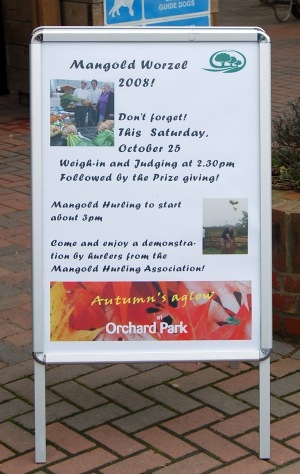
    This year’s mangold-growing contest and hurling event at Orchard Park Garden Centre, Gillingham, Dorset was held on Halloween, so what better time to revive the old Somerset tradition of Punkie Night? (The answer is 29th October, because Punkie Night is on the last Thursday of the month.)

    The origins of Punkie (or Punky) night are uncertain, but it has been a tradition in parts of Somerset for as long as anyone can remember. It involves making jack o’lanterns from carved mangolds, similar to the American tradition of carving pumpkins. Children sometimes carry them around and demand money with menaces, again similar to the American tradition of trick or treat.
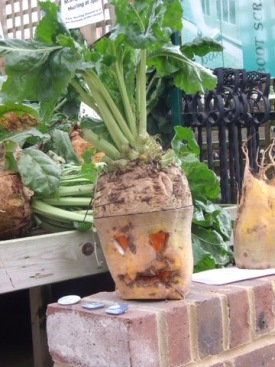
    Yellow Mangold Punkie
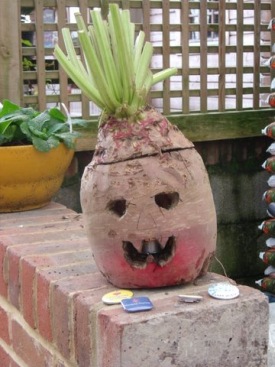
    Red Mangold Punkie

    The Punkie lanterns above were made specially for this year’s event, using a yellow mangold (left) and a red mangold (right).

    The Weigh-in and Prizegiving

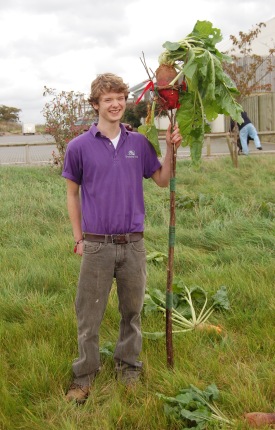
    Entries were down on last year because of the world recession, but the winning mangold in the senior class weighed in at an impressive 7.5Kg.
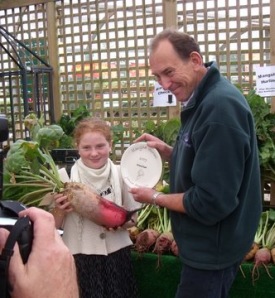
    Junior winner 2009
    Richard Cumming presents the prize for the Junior category, in the glare of the Gillingham paparazzi’s flashbulbs.
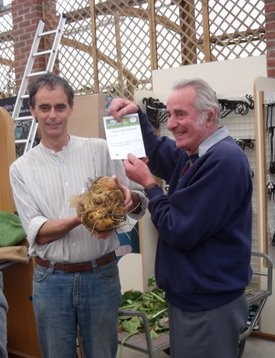
    Most interestingly shaped mangold winner
    The winner of the Most Interestingly-Shaped Mangold category gleefully displays his certificate. His mangold was interesting bordering on hideous.
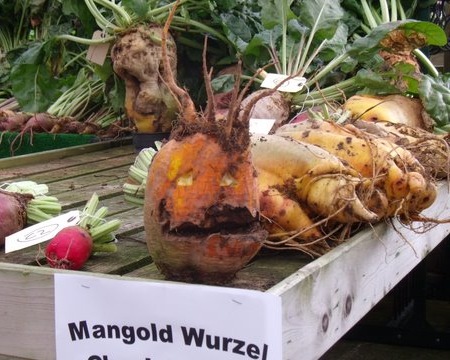
    Mangolds resembling human heads
    A display of mangolds, one looking like a face

    Above: an uncomfortably high proportion of the mangolds entered this year seemed to resemble human heads.
  • Somerset, April 2009

    4th April 2009
    Sowing Time at the Association’s Mangold Patch

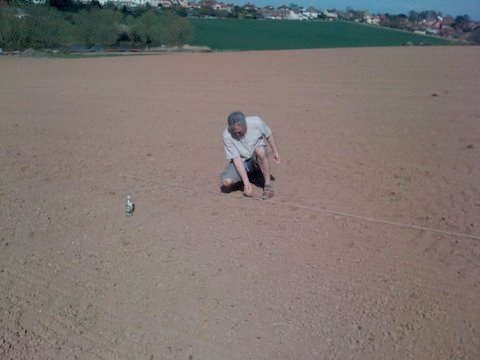
    These pictures show Mangold Hurling Association committee members sowing this year’s mangold seeds. We have attempted to recreate some of the fertility rites and symbols that were used in days gone by.
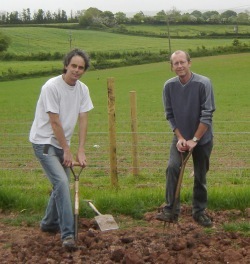
    Unfortunately we forgot to take a camera, but all was not lost because we were equipped with the latest portable telephones with built-in cameras. Consequently the resulting images are voice quality only. The Association apologises for any inconvenience this may cause.
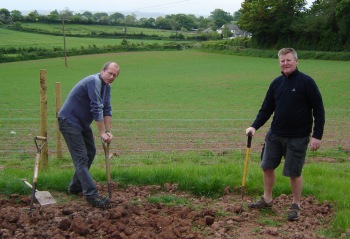
    Sowing mangold seeds
    This year the Mangold Hurling Association’s patch is larger than in the past, extending to some 160 (one hundred and sixteen) acres (hectares).

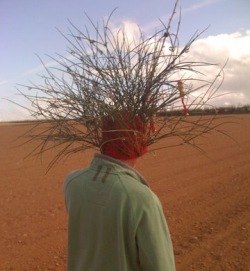
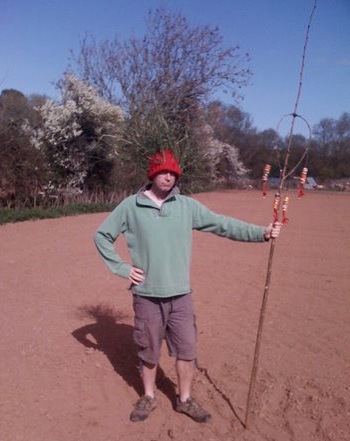
    Traditional fertility symbols

    Traditional fertility symbols

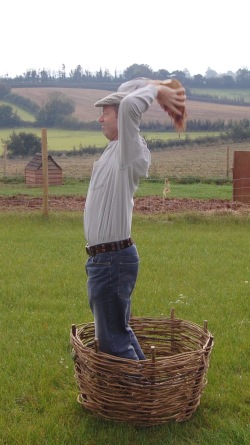
    This committee member is wearing the Hat of Fecundity. It is hard to see where the hat ends and the tree begins in this picture, so there is another picture below to provide some clarity.

    He is also holding a fertility stick. This stick is placed at the end of the row of mangolds to ward off evil spirits and rabbits. The dangly bits rattle in the wind, and the rabbits do not like this one bit.

    The Mangold Hurling Association would like to hear from any older readers who can remember what this stick is called.

    Hat of Fecundity, rear aspect
    Rear view of the Hat of Fecundity, this time with no trees to cause confusion.
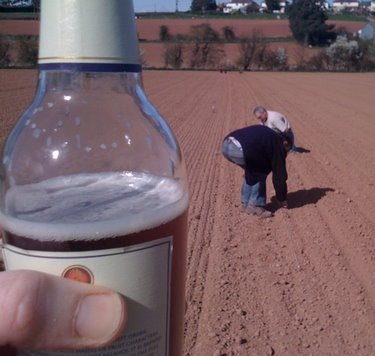
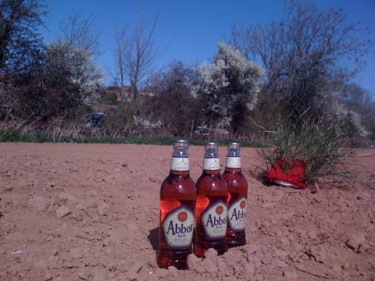
    Thirsty work
    Sowing is back-breaking work. The everyday object on the left gives an idea of scale.
    Still life
    Still life.
  • Gillingham, October 2008

    Orchard Park 2008

    Despite adverse growing conditions this year, an encouraging number of entries were received for the mangold-growing contest.

    The weigh-in and prizegiving was followed by an open mangold hurling contest in which mangolds of all sizes were provided so everybody could have a go. Exciting action pictures below!

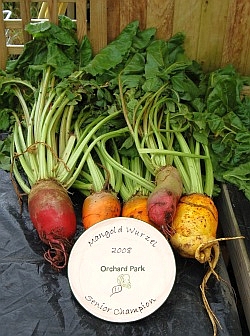
    Specially-commissioned plates were awarded to the winning Senior and Junior entries. These were made by Spotty Pots who were based at Orchard Park.

    The Weigh-in and Prizegiving…

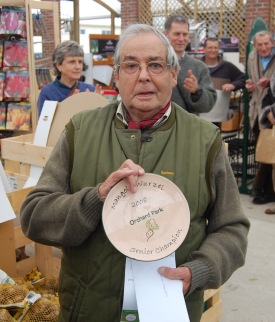
    Senior Prize Winner Orchard Park 2008
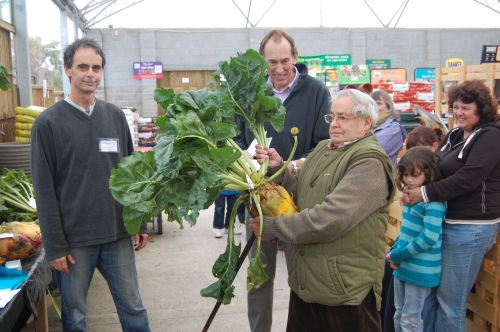
    The winner of the senior prize for the heaviest mangold proudly displays his winning root. This gentleman, who is 89 years old, narrowly missed first prize last year – a consistent performer!
    Senior Winner displaying his plate
    The crowd goes wild as the Senior class winner displays his plate.
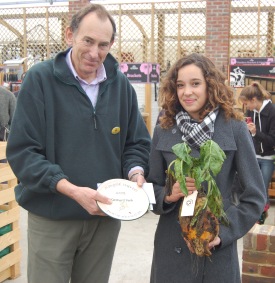
    Junior Winner, Orchard Park 2008
    The winner of the Junior class receiving her prize from Managing Director Richard Cumming. This was the heaviest Junior mangold despite having been attacked and partly eaten by something, probably a slug.
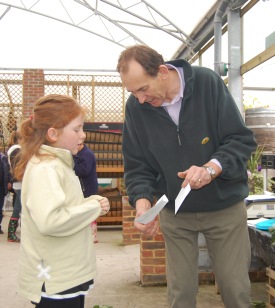
    Winner of the most interestingly shaped mangold
    Richard presents the prize for the most interestingly-shaped mangold. Unfortunately it is not actually in the picture, but you may rest assured that it was indeed interesting.
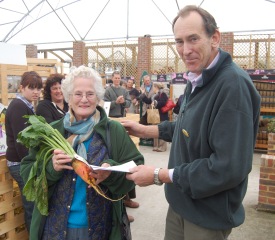
    Winner of the most aesthetically pleasing mangold
    This lady had the most aesthetically pleasing mangold. It has a nice shape, a long root and a lovely orange colour. She puts it down to the fine soil in her garden.

    … and the Mangold Hurling!

    The Mangold King, Gillingham 2008
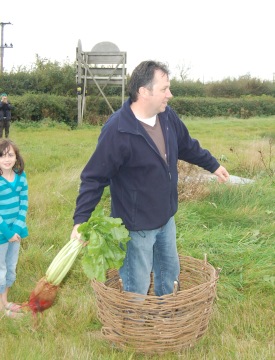
    This year’s Mangold King poses with the ennell, a sort of ceremonial mangold- carrying device.
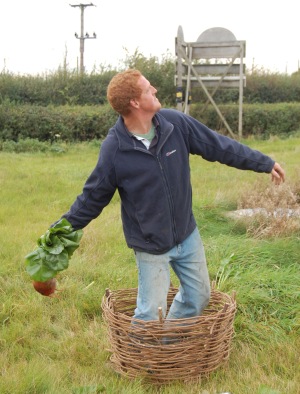
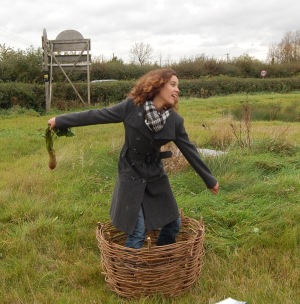
    A contestant getting ready to hurl
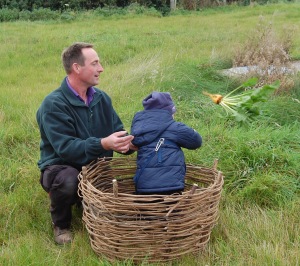
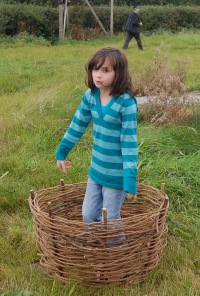
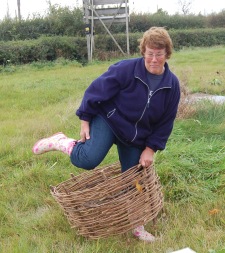
    A contestant in the pitching basket, about to hurl.
    Mangold hurling should be taken seriously
    Having second thoughts about mangold hurling?
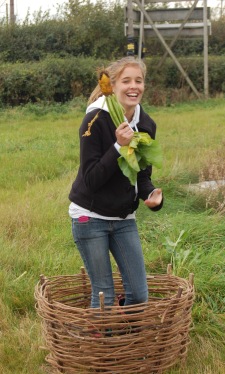
    A youngster getting a first taste of mangold hurling
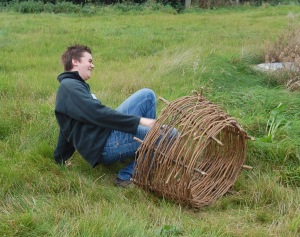
    A mangold hurler coming a cropper
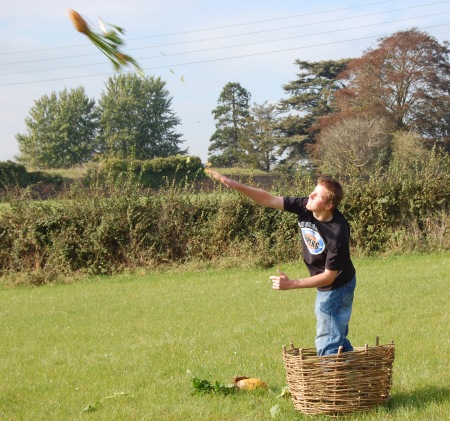
    A mangold hurler about to pitch a mangold
    A young mangold hurling contestant
    Practising an elegant exit from the pitching basket
  • Hurling in Ohio

    Transatlantic Mangold Hurling!
    News of a mangold hurling competition in Cleveland, Ohio

    Mangold and US flag

    Mangold hurling has enjoyed an enormous resurgence of interest in recent years, and people from all over the world are taking up the challenge of growing and hurling their own mangolds.

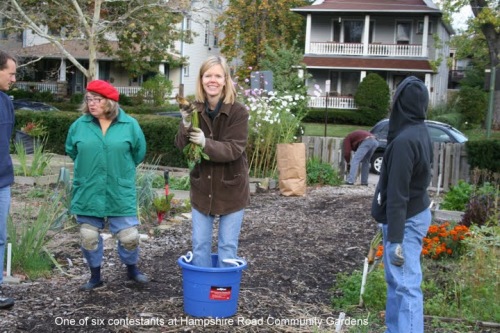
    We were delighted to hear from Lois in Ohio, USA, about a hurling event that took place in October 2008 in Cleveland Heights. Lois has kindly forwarded these pictures to the Association, showing the crop and some of the contestants in action at Hampshire Road Community Gardens.

    Mangold Hurling in Ohio
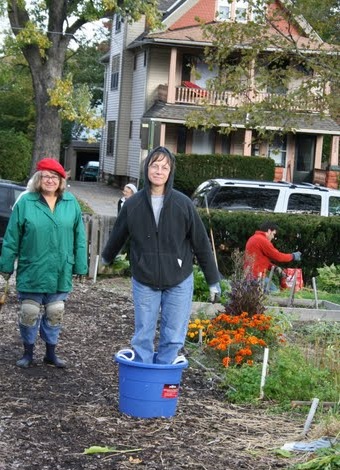
    In some parts of the world, willow pitching baskets can be hard to come by. The Hampshire Road residents overcame this difficulty by using this splendid blue plastic bucket – a colourful and practical substitute!
    Mangold Hurling Ohio-style
    The person in the background is trying to ignore what’s going on, but you can’t ignore a global phenomenon forever. Mangold hurling is weaving its way inextricably into the fabric of modern life.
    Mangolds from the Community Gardens
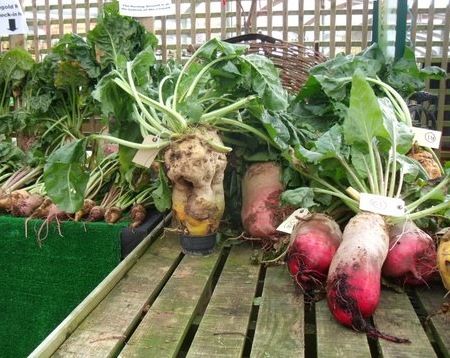
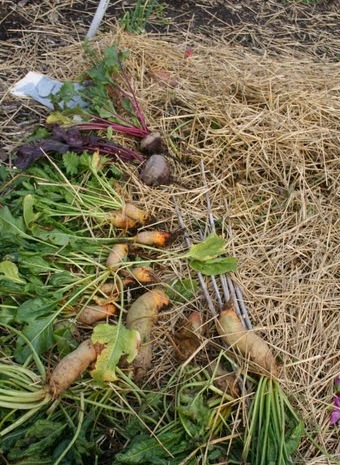
    A selection of beets grown in the Community Gardens.

    The specimens at the top of this picture appear to be beetroot, while those at the bottom have the yellowy-orange hue normally associated with beta vulgaris vulgaris and other types of fodder beet. These beets look ideal for hurling in an urban or suburban environment, because larger ones could do a lot of damage if they hit somebody’s house or car.

    A mangold close-up
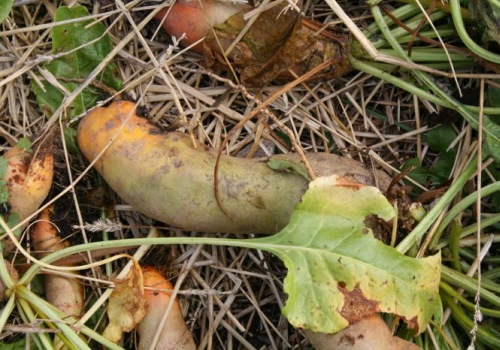
    Close-up showing the orange subterranean part of the root. Something’s been nibbling those leaves!
  • Somerset, October 2007


    October is the busiest month in the mangold hurling calendar. The mangolds grow rapidly during September, so that when October comes they are ready for harvesting.

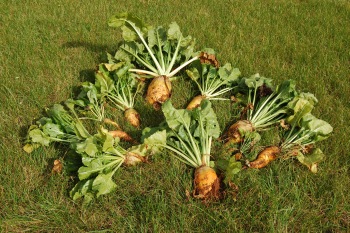
    On the right you can see a selection of this year’s mangolds from the Association’s patch, laid out in an attractive and artistic fashion. There is a wide range of sizes, including little ones for the kiddies.

    Lots of mangold wurzels
    A jolly good hurl
    The Association’s ace staff photographer risked his life to take this exciting action shot. Normally it is extremely inadvisable to stand in between the pitching basket and the Norman. Happily on this occasion he was not hit, but things could have turned out very differently.

    That’s a nice tree in the background, isn’t it?
    Placing the Norman
    Placing the Norman while at the same time trying out the Mangold Hurling Association’s new pitching basket. Its special features include pointy bits on the bottom which stick into the ground to provide extra stability. Despite this technical innovation, the basket has been hand-made in the traditional way using local materials.
    Novice hurler doing very well
    It is hard to believe that this gentleman had never previously hurled a mangold wurzel. Some people just seem to be naturally gifted.
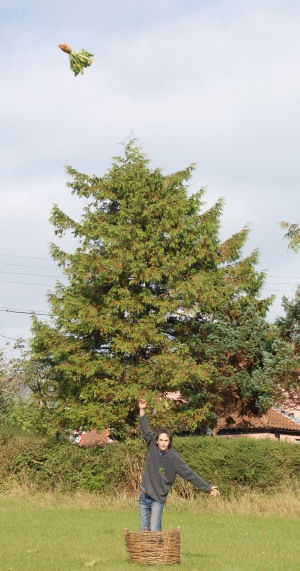
    An excellent hurl
    Crikey, look at that one go! A streamlined mangold in the right hands can be a deadly missile.

    For tips on how to make your hurling as impressive as this, see our illustrated How to Hurl section.

  • Somerset, June 2007

    Planting out at the mangold patch

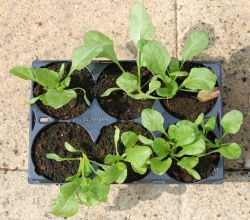
    Mangold seedlings ready for planting out
    Raised in captivity, these young mangold plants are now ready to leave their pots to join their counterparts in the mangold patch. This bird’s-eye view shows how the plants might appear to a crow or a tit.
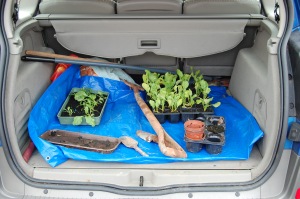
    Mangold paraphernalia in a car boot
    Everything you need for transplanting, thinning and weeding your mangolds can be accommodated in the boot of a conventional motor car. It is not necessary to purchase an agricultural vehicle.

    The mangold patch

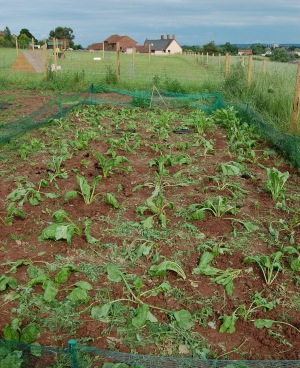
    A general view of the mangold patch following weeding and thinning. These operations have slightly traumatised the mangolds, resulting in the foliage looking a bit droopy. They will soon perk up though.

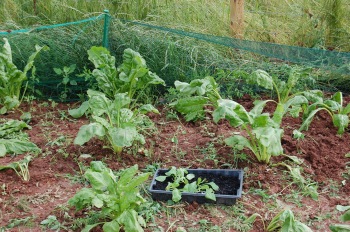
    These mangolds were sown directly in the soil, and are now nearly 7 (seven) weeks old and flourishing. A tray of young plants approximately four (4) weeks old is shown for comparison.

    The soil-grown mangolds are displaying superior growth because the ground here is particularly rich in nutrients, especially pig shit.

    A corner of the mangold patch
  • Somerset, May 2007

    Preparing the Mangold Patch

    In May 2007 work started on the Mangold Hurling Association’s new mangold plot at a secret location in Somerset.

    Breaking the sod
    Here we see committee members breaking the sod. The process of preparing new ground for mangold growing is called Derricking.
    Breaking ground
    In keeping with mangold hurling’s egalitarian ethic, even the Squire helps with the digging!
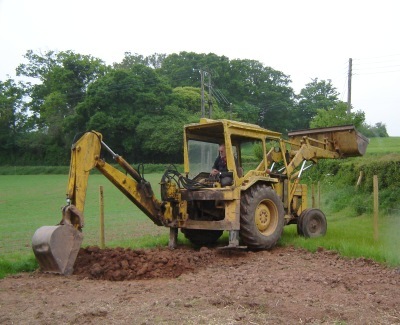
    Derricking using a backhoe digger

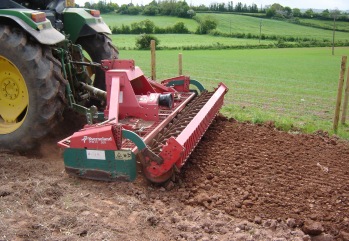
    Sometimes the nature of the sod is such that it is impossible to dig without quickly becoming tired, irritable and argumentative. The only thing to do in these circumstances is to mechanise the process.

    The pictures show the high-tech solutions employed by the Association. Although steeped in tradition, we are not afraid of using leading edge technology when appropriate.

    This power harrow takes a lot of the work out of preparing the mangold plot and is recommended by the Association.

    Users should be careful to keep away from the moving parts.

    The power harrow at work
    Sowing mangold seeds

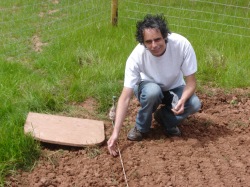
    Seeds should be sown 18 inches apart and about 1 inch deep. You can use a piece of string to make nice straight rows.

    The thing on the left of the picture is just a piece of plywood; it has no particular purpose and does not have a special name. It should not really be in the picture at all – it is a mistake.

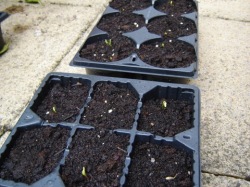
    If you like you can start your mangold seeds off in pots or seed trays and plant them out later. The ones on the right were sown 10 days previously, and if you look carefully you can just about see the seedlings poking their heads above the surface.

    If you put your seed trays in the garden, mind the cat doesn’t use them to do its business.

    Day 10, the first sign of life
  • Somerset, October 2006

    A Photographic Montage from Somerset, 2006

    Photo montage from 2006